
Menopause Hair Loss
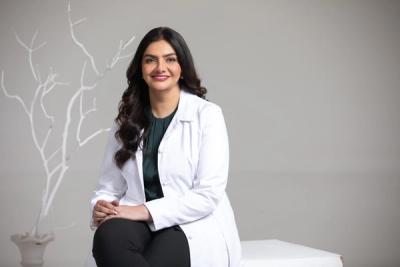
Thinning hair in perimenopause or after menopause has causes that can be found and treated. Sabeen Munib M.D. checks the medical reasons first.
Last updated October 2026
Why hair thins in perimenopause and menopause
Hair loss around menopause is common. As estrogen falls, hair spends less time growing, and the androgens women also make have a stronger effect on the scalp. For many women this shows up as a wider part and thinning on top of the head, called female pattern hair loss.
It is not always the hormones. Thyroid problems, low iron, low vitamin D or B12, fast weight loss, a recent illness or stress, and some medicines can all cause or worsen hair loss. A visit and blood tests can find these.
Gradual thinning on top
A wider part or see-through crown that develops over months to years usually points to female pattern hair loss.
Sudden heavy shedding
Hair coming out in handfuls two to three months after an illness, surgery, stress or fast weight loss is usually a shedding phase called telogen effluvium. It often settles on its own once the cause is gone.
Patches or scalp symptoms
Bald patches, redness, scaling or pain point to other conditions and need a closer look.
What Dr. Munib checks first
Several medical causes look the same in the mirror, so the visit starts with your history and an exam, then the blood tests that fit your symptoms.
- Thyroid function (TSH)
- Iron stores (ferritin) and a blood count
- Vitamin D and B12
- Signs of higher androgens, such as acne or new facial hair, which can point to PCOS
- Your medicines and any recent weight change, including GLP-1 medicines
Bald patches, scalp pain or scarring may need a specialist or a scalp biopsy, and Dr. Munib refers you when that is the case.
Menopause hair loss treatment options
Treatment depends on the cause. When a medical cause is found, treating it comes first. For female pattern hair loss, these are the main options Dr. Munib may discuss with you.
Minoxidil
Topical minoxidil is FDA-approved for hair regrowth in women and is sold over the counter. It is used every day, and it usually takes at least four months to see a difference. Some women notice more shedding in the first weeks.
Spironolactone
A prescription medicine used off-label for female pattern hair loss in selected women. It needs blood pressure and potassium checks, and it is not for anyone who is pregnant or planning a pregnancy.
Hormone therapy (HRT)
HRT treats menopause symptoms such as hot flashes, night sweats and poor sleep. It is not a treatment for hair loss on its own.
Supplements help only if you are low in something. Biotin rarely helps unless you are deficient, and it can throw off some blood tests, including thyroid and heart tests, so tell us if you take it before your labs.
Looking for in-office scalp treatment?
The medical side of hair loss is treated at The Pur Health. In-office scalp treatments, PRFM and exosome hair treatment, are available with Sabeen Munib M.D. at our sister practice, Spectrum Skin Clinic, in the same Irvine office.
Hair restoration at Spectrum Skin Clinic
These treatments work on follicles that are thinning but still alive, and results build over months.
Read more → about Hair restoration at Spectrum Skin ClinicWill menopause hair loss grow back?
It depends on the type of hair loss, which is why the cause comes first. Many women have more than one type at once, for example shedding after a stressful year on top of gradual thinning.
Shedding usually grows back
Heavy shedding starts about two to three months after a trigger such as illness, surgery, stress or fast weight loss. It slows once the trigger is gone, and hair often returns to its usual fullness within six to nine months.
Pattern thinning needs treatment
Female pattern hair loss does not reverse on its own. Treatment slows it and thickens the hair you have, and it works best when started early, while the follicles are still active.
Give treatment time
Minoxidil usually takes at least four months to show a change, and longer to judge fully. If you stop, the thinning usually returns over the following months.
When to come in sooner
Bald patches, scalp redness, scaling, burning or pain can mean a scarring type of hair loss. Hair lost to scarring does not grow back, so early treatment matters.
What you can do now: be gentle with wet hair, avoid tight ponytails, braids and hot tools, eat enough protein, and get iron, vitamin D and thyroid checked before buying supplements.
Hair loss on Wegovy or Zepbound
Hair loss is listed on the Wegovy and Zepbound labels, and it is linked to the weight loss rather than to the medicine itself. Losing weight quickly can push many hairs into a resting phase at once, so shedding often shows up two to three months after a big drop on the scale. It is reported more often in women.
It is usually temporary
This kind of shedding usually slows once your weight steadies, and the hair grows back over the following months. Most people do not need to stop the medicine because of it.
Slow the pace
Losing weight steadily rather than very fast helps. Dr. Munib can adjust how quickly your dose goes up if shedding is heavy.
Protect protein and nutrients
Eating less can mean too little protein, iron and vitamins for hair. Protein at every meal and a check of iron (ferritin), vitamin D and B12 help find and fix gaps.
Look for thinning underneath
Shedding can reveal pattern thinning that was already starting around menopause. If the part keeps widening once weight is stable, that thinning is treated on its own.
Do not stop your GLP-1 medicine on your own because of shedding. Book a visit so the cause can be checked and the plan adjusted.
Cost and insurance
A hair loss visit is a medical visit. The visit and blood tests can usually be billed to insurance, and we are in-network with most PPO plans. Cash visits are $190 for new patients and $150 for returning patients. Cosmetic scalp treatments are self-pay.
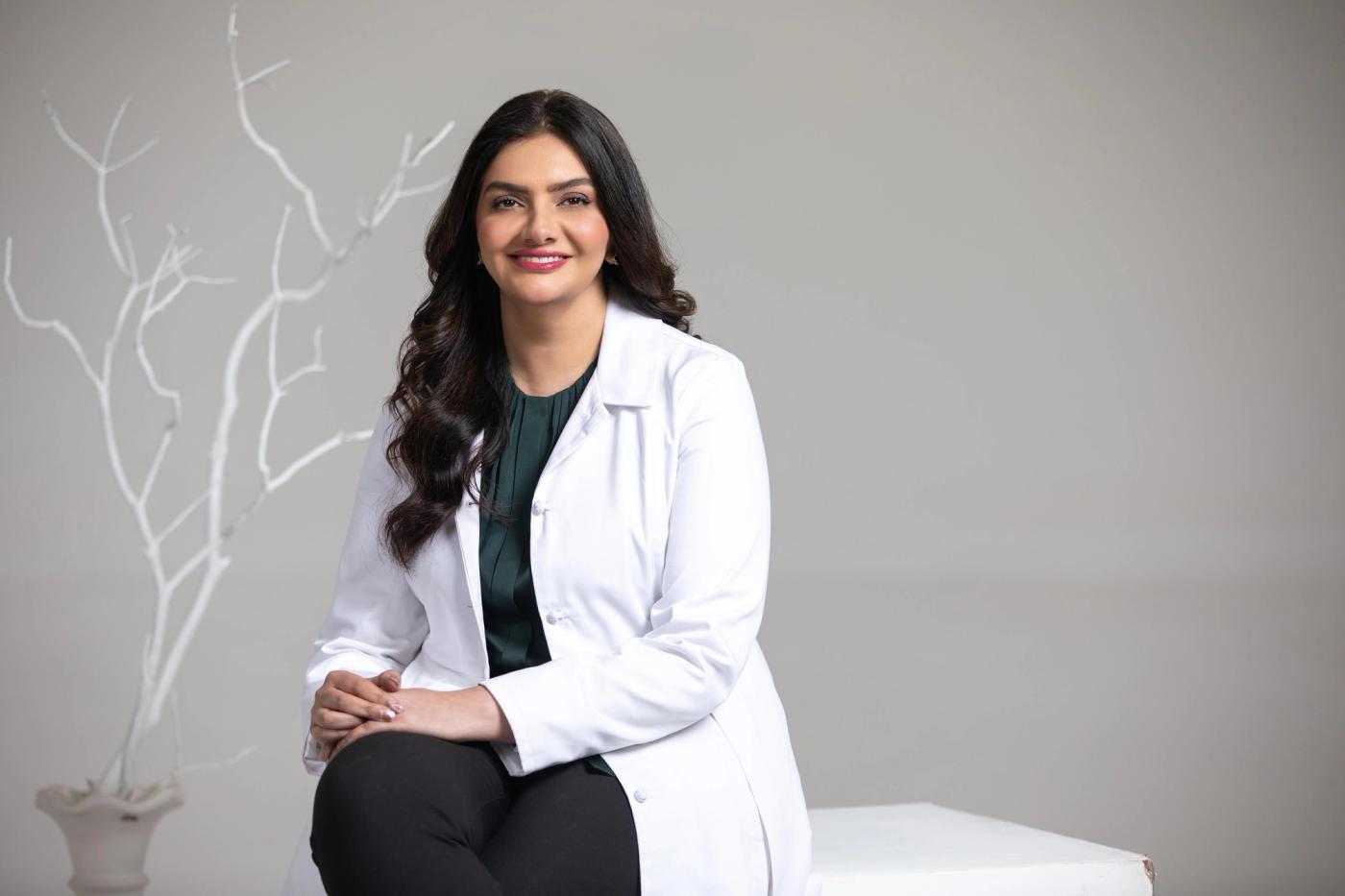
Sabeen Munib M.D.
MD · Residency at the University of Minnesota
Dr. Munib has cared for patients in Irvine and Orange County for more than 15 years. She focuses on preventive care, chronic disease management and whole-person wellness, and she takes the time to explain what she finds.
- Speaks Urdu and Hindi; our team also speaks Arabic, Farsi and Tagalog
- Sees adults and teens 12 and older
What our patients say
“I've been with Dr.Munib for nearly 10 years and she's been absolutely incredible. She's always available and goes out of her way to help. She's incredibly responsive and has helped me with issues that other specialists couldn't solve. It's so important to have a doctor who is always there for you and goes above and beyond to help and I found that with Dr.Munib. I can't recommend her enough! She's simply amazing.”
“Dr. Munib is an amazing doctor. She listens to your health concerns and addresses them right away. She is very kind and takes her time to listen and explain everything. I’ve always been anxious to visit a doctor’s office, so I’m glad I found Dr. Munib because she is the best!”
“Dr. Munib is a wonderful doctor, always listening and giving spot-on diagnosis, she does not steer us wrong. No nonsense and to the point. My family and I truly appreciate her as a doctor.”





Frequently asked questions
Questions are welcome. Our team is happy to help before you book.
Call (949) 647-5234What causes hair loss during menopause?
Falling estrogen and the stronger effect of androgens on the scalp are the main reasons. Thyroid problems, low iron, low vitamins, fast weight loss and stress can cause or add to it, so they are checked too.
Can perimenopause cause hair loss?
Yes. Hair can start thinning in the years before your last period as hormone levels change. Thyroid and iron problems are also common at this age, so they are checked with a blood test.
Will my hair grow back after menopause?
It depends on the type. Shedding from illness, stress or fast weight loss usually recovers within six to nine months. Female pattern hair loss does not reverse on its own, but treatment slows it and thickens existing hair, working best when started early.
Is hair loss on Wegovy or Zepbound permanent?
Usually not. It is linked to the weight loss and usually settles once your weight steadies, with hair growing back over the following months. Checking iron, vitamin D and protein intake helps, and most people do not need to stop the medicine.
Does HRT help menopause hair loss?
HRT is not a treatment for hair loss on its own. It treats menopause symptoms such as hot flashes and poor sleep, and hair loss is treated based on its cause.
What vitamins help menopause hair loss?
Only the ones you are low in. Iron, vitamin D and B12 are checked with a blood test, and correcting a true deficiency can help. Extra vitamins when your levels are normal have not been shown to regrow hair.
Does minoxidil work for women?
Topical minoxidil is FDA-approved for hair regrowth in women. It is used daily, results usually take at least four months, and the benefit lasts only while you keep using it.
Is my hair loss from menopause or my thyroid?
It can be either, or both at once. That is why a thyroid blood test is part of the visit before treatment is chosen.
Is a hair loss visit covered by insurance?
Often, yes. The medical visit and blood tests can usually be billed to PPO insurance. Cash visits are $190 for new patients and $150 for returning patients, and cosmetic scalp treatments are self-pay.
Can PRFM or exosomes help menopause hair loss?
They can help thinning hair where follicles are still active, as a series of treatments at our sister practice, Spectrum Skin Clinic, with Dr. Munib. They do not regrow hair that is gone, so the scalp is examined first.
Have any Questions? Feel Free To Contact Sabeen Munib M.D.
Get in touch and our team will call or email you. You can also call (949) 647-5234.